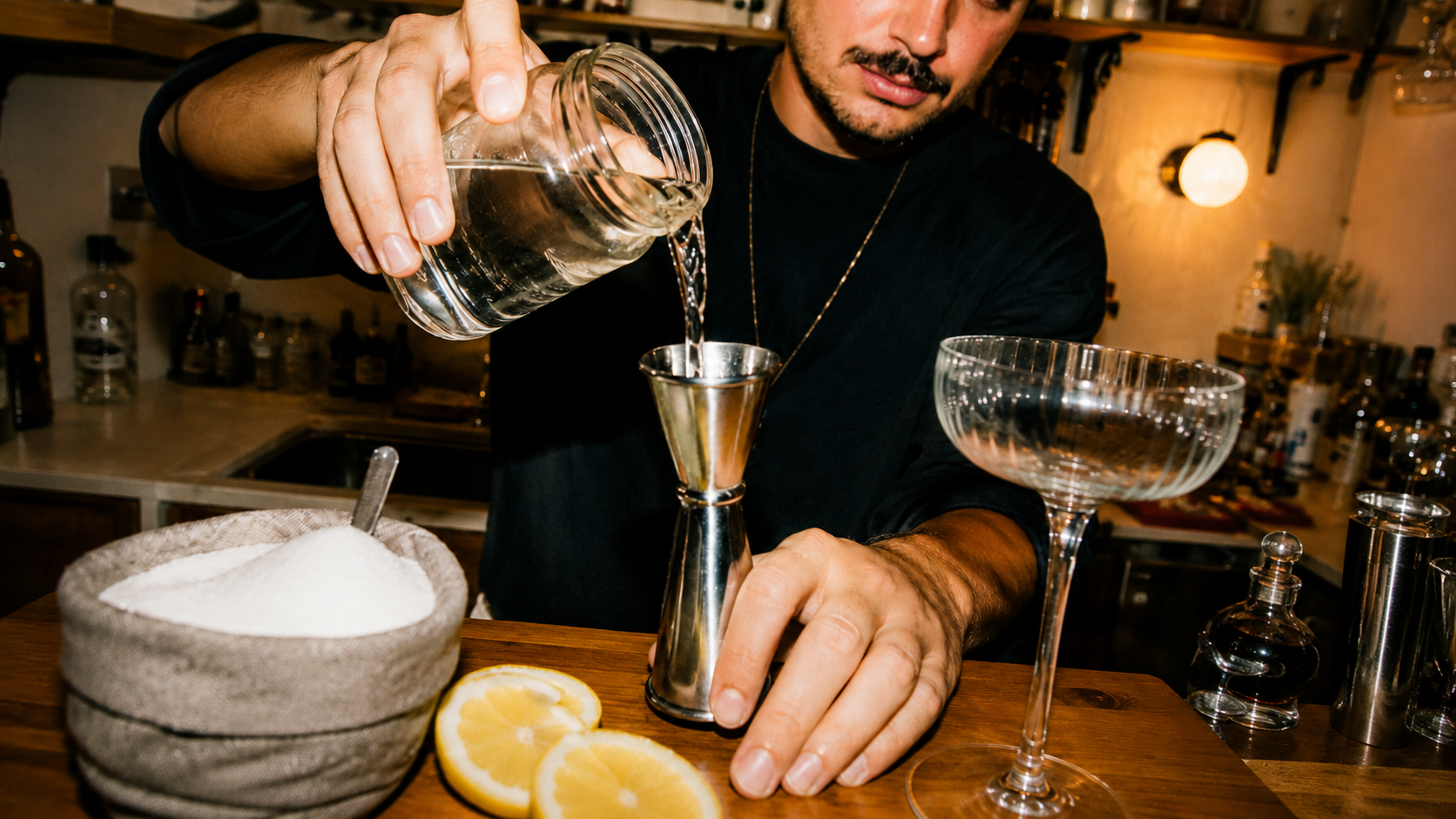
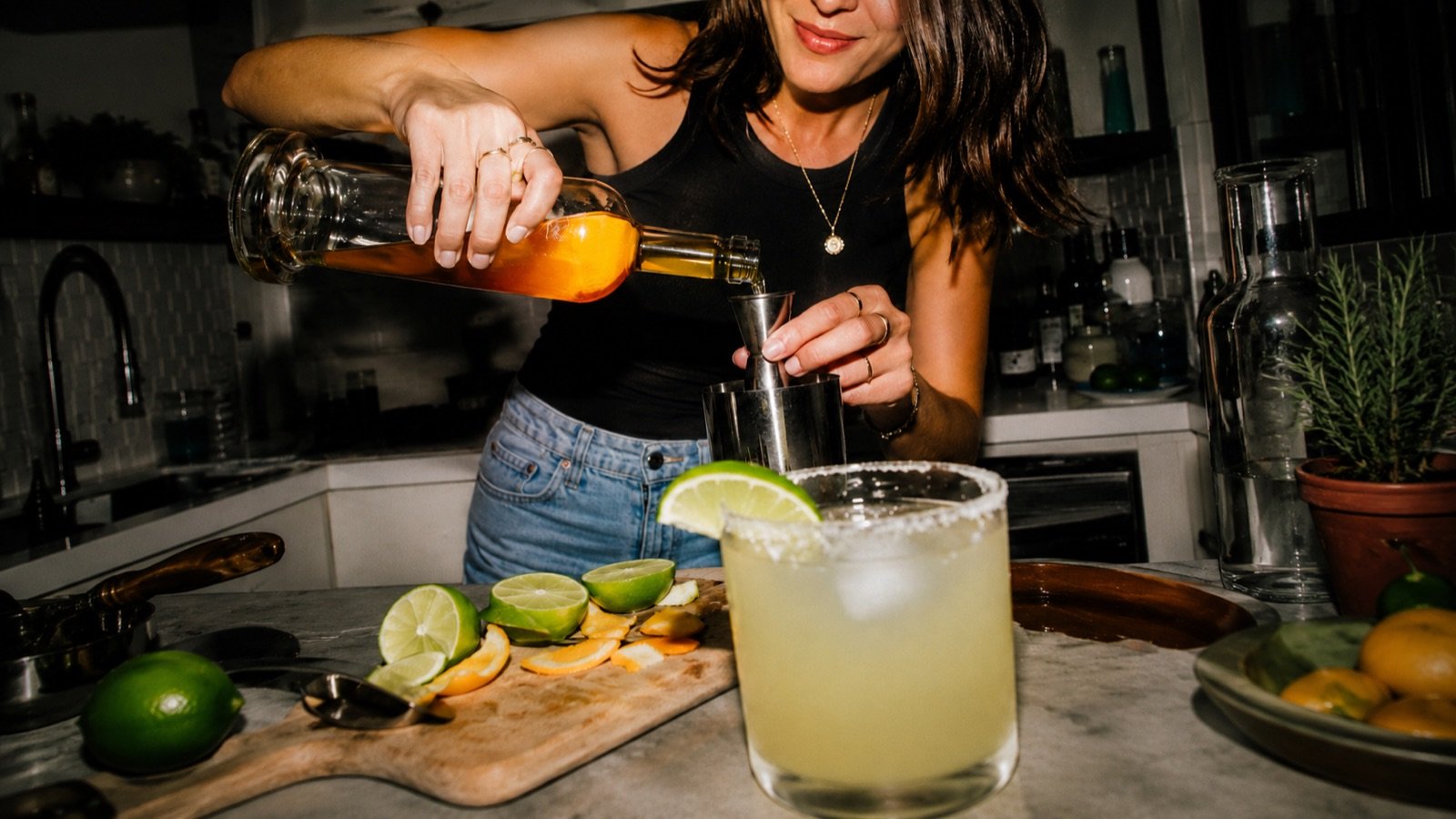
Out of triple sec? Reach for Cointreau, which is itself a triple sec bottled at 40% ABV, and swap it in one for one with no real change to the drink.
Grand Marnier also stands in one for one, though its Cognac base brings a warmer, sweeter profile. Any dry 40% orange liqueur or curaçao works too, at the same 1 oz (30 ml) you'd have poured of triple sec.
For a margarita, that keeps the classic 2:1:1 build intact. Pour 2 oz (60 ml) tequila, 1 oz (30 ml) orange liqueur, and 1 oz (30 ml) fresh lime.
The best triple sec substitutes, ranked
Triple sec is a dry, purely orange-flavored liqueur, based on a neutral spirit distillate, and the bottles you'll find on a back bar swing widely in strength, from roughly 15% up to 40% ABV. That spread matters when you swap, because a higher-proof stand-in holds its own against tequila and sharp lime where a weak, sugary one gets lost.
Pick a swap at or near 40% and you'll barely notice the change. Difford's Guide makes the same call, recommending a 40% ABV triple sec such as Cointreau, Combier, or Merlet for cocktails.
Three swaps cover almost every situation, ordered from cleanest to most characterful.
- Cointreau pours in with no change at all, since it's a triple sec by definition.
- Grand Marnier works one for one with a warmer, Cognac-tinged finish.
- Dry curaçao or another 40% orange liqueur slots in cleanly, running a shade more spiced.
Cointreau, the clean one for one
Cointreau is the best drop-in you can buy. It is a triple sec itself, bottled at 40% ABV, so it slots in at the same measure with no recipe math.
The recipe hasn't drifted in nearly 150 years. Cointreau has been made from sweet and bitter orange peels since 1875, so you're pouring the same style of orange liqueur the cocktail was written for.
It's also the most versatile stand-in across cocktails, from margaritas to a Cosmo to a sidecar, since it adds clean orange without a competing base flavor. That's why it's the swap you can make without second-guessing the recipe.
Bartenders reach for it first, too. Janice Bailon, head bartender at Leyenda in Brooklyn, names Cointreau as her preferred swap when the triple sec runs dry, sometimes with a touch of agave or simple syrup for extra roundness.
Grand Marnier, one for one with more warmth
Grand Marnier swaps in one for one as well, with one caveat. Its Cognac base plus bitter-orange essence and sugar brings baking-spice, vanilla, and toffee notes, along with a deeper color that can tint a pale drink.
Lean into that richness rather than fighting it. Pour it, taste, and dial back the added sweetener if the drink lands too soft.
Some drinkers treat Grand Marnier as the upgrade rather than the substitute, reaching for it when they want a plusher margarita. For the exact detail on how Cointreau, Grand Marnier, and triple sec compare, that's a full comparison in its own right; for a swap, treat all three as interchangeable.
Any dry orange liqueur or curaçao
A 40% orange liqueur such as Combier, Merlet, Giffard, or Pierre Ferrand Dry Curaçao stands in one for one just like Cointreau does. These are exactly the fuller-flavored alternates working bartenders keep on the shelf.
The main flavor split is between plain and spiced. Triple sec is purely orange-flavored, while curaçao carries added vanilla, cinnamon, and floral notes that make it softer and rounder in the glass.
Whichever you grab, keep it high-proof. Skip the bargain, low-proof triple secs that taste like orange candy, because against tequila and lime they read watery and cloying.
Ratios: rebuild the drink around your swap
Use the same volume you would have poured of triple sec, one part orange liqueur to the recipe's other parts. That one rule covers almost every cocktail, so you rarely need to rethink the whole build.
Two margarita ratios are worth memorizing. The classic runs 2:1:1, and a more spirit-forward version runs 3:2:1.
| Build | Tequila | Orange liqueur | Fresh lime |
|---|---|---|---|
| Classic 2:1:1 | 2 oz (60 ml) | 1 oz (30 ml) | 1 oz (30 ml) |
| Spirit-forward 3:2:1 | 3 parts | 2 parts | 1 part |
The 2:1:1 build is Cointreau's own house margarita, a safe default for any orange-liqueur swap. The 3:2:1 version pushes more tequila forward, and it's easy to remember by counting down three, two, one.
The same one-part logic carries over to a Cosmopolitan, a sidecar, or any drink that lists triple sec. Match that measure with your orange liqueur, then taste against the other citrus before you strain.
What to use in a margarita
In a margarita, reach for Cointreau or Grand Marnier at the same 1 oz (30 ml) and you're set. With no orange liqueur in the house at all, fresh orange juice plus a little agave gets you close enough to enjoy, a compromise rather than a true match.
The orange liqueur is doing real work here, since it balances the lime's acidity and adds a warm citric note. Janice Bailon puts it plainly: drop it entirely and you've made a Tequila Sour, not a margarita.
If your swap runs a touch dry, a small pour of agave or simple syrup brings back the richness a triple sec would have added. For a zero-proof margarita, fresh orange juice or a little agave is the route, with the full method in the non-alcoholic section below.
Want to build the drink from scratch around your swap? Try a classic margarita build and drop your chosen orange liqueur into the 1 oz slot.
What to use in a cosmopolitan
In a Cosmopolitan, Cointreau or Grand Marnier both stand in for triple sec one for one, sitting alongside the vodka, cranberry, and lime. The orange liqueur is one of the drink's four core parts, so a clean swap keeps the balance the recipe expects.
Because the Cosmo leans on the orange note more than a margarita does, a 40% swap is the safer pick here. Cointreau is the classic choice, and a dash of orange bitters or a flamed orange twist plays up the citrus the drink is built around.
A homemade non-alcoholic orange stand-in turns it into a mocktail Cosmo, using the same blend you'd make for a zero-proof margarita. Keep the measure small whichever way you go, because the orange liqueur is there to round the drink, not sweeten it, and an extra glug tips it out of balance fast.
Non-alcoholic and zero-proof options
Two clean routes give you the orange note without the alcohol. You can buy a zero-proof orange liqueur off the shelf, or blend a quick stand-in from your fridge, and both drop straight into a margarita or Cosmo at the same measure.
Buy a zero-proof orange liqueur
Bottled zero-proof orange secs are built to mix. Dhōs Orange, for one, uses real orange essence and pours into a margarita or Cosmo at the same 1 oz (30 ml) you'd use for triple sec, at around five calories a pour with no sugar crash.
The category has grown, and most bottles lean on sweet and bitter orange with a touch of marmalade to mimic the real thing. Choose one made to mix rather than sip, since these are built for cocktails and can taste flat on their own.
One bottle covers both drinks you've read about here. Pour it at the same 1 oz (30 ml) in a margarita or a Cosmo, and the build stays exactly as written minus the alcohol.
Make a quick non-alcoholic stand-in
You can blend a passable orange stand-in in under a minute:
- Mix roughly 1 part simple syrup to 3 parts fresh orange juice for a clean citrus accent with natural sweetness.
- For a more concentrated orange hit, stir a few drops of orange extract into an ounce of simple syrup, then dilute with water to taste.
- Taste and adjust before you pour, since extract is potent and easy to overdo.
Fresh orange juice on its own is the most accessible route, though it trades away some punch. It adds no alcohol and a less concentrated orange note than a real liqueur, so a bar-spoon of agave brings the sweetness back up to match.
For more depth, stir in some grated orange zest with the juice and sweetener. The oils in the peel carry most of the aroma a real liqueur delivers, which nudges a homemade blend closer to the mark.
Watching sugar? Lean on agave sparingly instead of a heavy syrup to keep a skinny margarita light, and remember these still sit next to a spirit in most builds, so keep an eye on how many you pour in a night.
Not sure which zero-proof swap works with the bottles and mixers you already own? Garçon, the AI bartender in Fix Me a Drink, can suggest one from your My Bar in seconds.
Make your own orange liqueur from scratch
Want the real thing without a store run? You can steep orange peel in a neutral spirit and sweeten it to make your own orange liqueur at home.
That's a weekend project rather than a tonight fix. When you have the time, a homemade batch beats any quick stand-in and keeps a bottle ready for the next round.
What not to reach for
Plain vodka is the swap to avoid first. It adds alcohol but none of the orange or sweetness triple sec brings, so the drink lands thin and boozy.
Orange extract poured straight from the bottle is the second miss. Neat extract is far too concentrated and bitter for a drink, so it always needs diluting first.
Plain juice or syrup on their own will change what you're drinking:
- Straight orange juice turns a margarita into a sweet tequila-lime drink.
- Simple syrup alone makes a Tequila Daiquiri instead.
Treat those as a compromise when the cupboard is bare, not a like-for-like match. Leave the candy-sweet, low-proof triple secs on the shelf as well.
These bargain bottles tend to sit around 15% to 25% ABV and carry more added sugar than a 40% orange liqueur. That extra sweetness is why the classic 2:1:1 build was written around a dry, higher-strength bottle in the first place.
Baking is the one place orange extract earns its spot. For a recipe, about half a teaspoon of extract per tablespoon of triple sec works.
That ratio only applies to baking, where the heat cooks off the harshness. In a cold drink it stays raw and bitter, so it needs diluting with simple syrup first.
Frequently asked questions
Can I use Grand Marnier instead of triple sec?
Yes, one for one. Expect a warmer, sweeter, slightly richer result, because Grand Marnier's Cognac base carries more body than a neutral triple sec.
Do margaritas need triple sec?
A margarita needs an orange liqueur of some kind to be a margarita. Leave it out completely and you've made a Tequila Sour instead.
What can I use instead of triple sec in a margarita?
Cointreau or Grand Marnier at 1 oz (30 ml) is the cleanest swap. With no orange liqueur on hand, fresh orange juice plus a little agave stands in as a compromise.
How do I make a non-alcoholic triple sec?
Mix about 1 part simple syrup to 3 parts fresh orange juice, or stir a few drops of orange extract into simple syrup and dilute to taste. Either one gives you the orange-sweet note for a mocktail version of the drink.
Can I substitute vodka for triple sec?
No. Vodka adds alcohol but none of the orange flavor or sweetness that triple sec provides, so it can't carry the swap on its own.
Your next pour without triple sec
Any dry 40% orange liqueur swaps in one for one, so Cointreau, Grand Marnier, or a good curaçao all keep your drink on track. Adjust sweetness to taste with a little agave when a swap runs dry.
Save the fresh orange juice fallback for nights when there's no liqueur in the house at all. It gets you a perfectly drinkable margarita, just not quite the same one.
From here, browse more tequila cocktails to put your swap to work in something new.
And when you'd rather not guess, Fix Me a Drink can help. Garçon reads what's in your My Bar and suggests a swap you can actually make tonight.